
Pillbugs
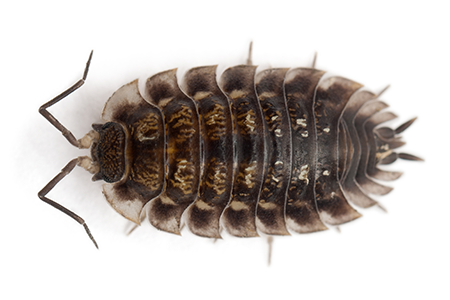
PILLBUGS & SOWBUGS:(Order Isopoda)
Description:
Commonly known as "roly-polies," pillbugs are not insects but
are crustaceans. They are approximately 1/4 to 5/8 of an inch
long and can be identified by their armadillo-like jointed,
armored surface. They are metallic gray and can roll into a
tight ball, called conglobation, when touched. Sowbugs are
very similar in appearance to pillbugs and can also roll into
a ball. Both types have 7 pairs of legs and two short tail
appendages.
Biology:
Pillbugs and sowbugs typically inhabit high-moisture areas,
but can also travel on dry ground for a hundred feet or more.
They may enter buildings through thresholds or ground-level
sliding glass doors and are mostly active at night.
Occasionally, these pests may enter a building in large
numbers. Once inside, they can be an unsightly nuisance, but
they soon die due to lack of moisture.
Did You Know?
Pill bugs breathe through gills that absorb oxygen from water and transport it to their blood vessels. Their gills need to stay moist, so if they dry out, they can suffocate.
Impact:
While not considered a serious economic threat, their visible
presence is undesirable in and around buildings, like any
other unsightly pest. Pillbugs and sowbugs feed on decaying
plant materials and can damage the roots of tender plants,
stunting their growth.
Solutions:
Controlling pillbugs and sowbugs involves eliminating the
moist areas outside the building that make their presence and
survival possible. This is not always possible in highly
irrigated ground covers, so working with landscape maintenance
personnel to place properly labeled baits and
micro-encapsulated insecticides is the preferred method.