
Pigeons
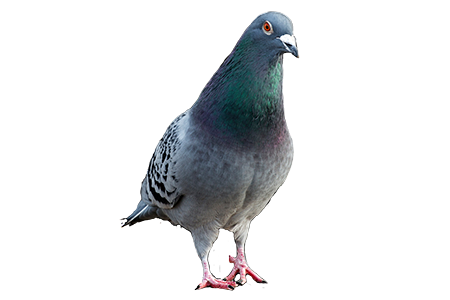
PIGEONS (Columba livia)
Description:
Pigeons, also known as rock doves, are about 13 inches high
with short legs, a stocky build, and a small head. Most
pigeons have a dark gray head with an iridescent sheen, a
light gray back, and wings with two dark bands. They gather in
large flocks on the ground, buildings, or telephone wires.
Biology:
In the wild pigeons are naturally drawn to cliffs. They are
common throughout the U.S. and have adapted to many different
habitats from the tall buildings of cities to urban areas.
Pigeons will nest in various locations such as building
ledges, rafters, garages, and signs. They have become the most
serious bird pest affecting commercial properties. In Southern
California, pigeons nest during all seasons, producing up to
ten young per year. Food court areas attract large flocks of
pigeons. They also feed on handouts and garbage, littering the
ground with trash and droppings. Left unchecked, pigeons can
become a serious public relations problem.
Did You Know?
Pigeons are one of the few birds that can recognize themselves in mirrors and puddles.
Impact:
Pigeon droppings are much more than just a nuisance on
commercial properties. The acid in their droppings is
extremely destructive to paint, concrete, plaster, marble,
limestone, wood, metal, and roofing. Nest often becomes solid
with accumulated droppings. Billions of dollars are spent
annually fixing these issues.
Another serious liability is disease. Pigeon droppings are a contamination hazard that can transmit a variety of diseases. Pigeons carry bacteria, fungi, nematodes, and several viral encephalitis diseases. Many of the parasitic mites associated with pigeons also bite humans. Because of this pigeons are not just an economic concern, they are also a serious health risk and liability to commercial property owners.
Solutions:
Good sanitation practice is the primary factor in pigeon
management. Exclusion barriers are legally registered
repellency baits and are also an effective solution. Bird
repellent baits need to be applied by a licensed pest
technician.