
Fleas
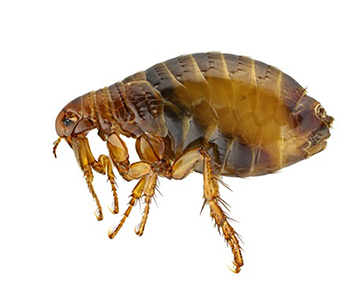
FLEAS (Ctenocephalidesfelis)
Description:
Adult fleas are difficult to see and identify. They are
wingless insects, approximately 1/8 inch long and
reddish-brown or black. They are slim, compressed-looking from
side to side, and can appear to be walking “on edge”. Cat
fleas are the most frequently encountered fleas. Since they
are common pests on domestic cats and dogs, fleas or their
larvae may be transferred by humans having personal contact
with them.
Biology:
Fleas have piercing-sucking mouthparts which they use to
obtain blood from their host animal. Flea larvae develop more
quickly at higher temperatures. When temperatures are cool,
fully formed fleas can remain in their cocoons for up to 12
months. Warm temperatures and carpet vibrations will stimulate
the emergence of new fleas. Fleas can be found on pets
throughout the year, but their numbers tend to increase
dramatically during the spring and early summer.
Did You Know?
Fleas have been around for millions of years, and fossils found in China suggest that dinosaurs may have had them too. The oldest fleas were up to 10 times larger than modern fleas and had tough mouthparts to break through the tough dinosaur skin.
Impact:
Fleas can transmit disease and parasites to humans and
animals. Fleas readily try to feed on almost any warm-blooded
animal. Bites tend to be concentrated on the lower legs but
can happen anywhere. In commercial environments, a flea
infestation can disrupt a whole office and cause a costly
shutdown until the pest problem is eliminated.
Solutions:
The best solution is prevention. Effective products aimed at
controlling fleas on pets have made flea management, without
pesticide sprays, feasible in many situations. Controlling
common fleas in office environments requires a multi-level
approach including insecticidal growth inhibitors, sanitation,
and monitoring.